A drink with as little as one gram of lemon grass contains enough citral to prompt cancer cells to commit suicide in the test tube. At first, Benny Zabidov, an Israeli agriculturalist who grows greenhouses full of lush spices on a pastoral farm in Kfar Yedidya in the Sharon region, couldn't understand why so many cancer patients from around the country were showing up on his doorstep asking for fresh lemon grass. It turned out that their doctors had sent them. 'They had been told to drink eight glasses of hot water with fresh lemon grass steeped in it on the days that they went for their radiation and chemotherapy treatments,' Zabidov told ISRAEL21c. 'And this is the place you go to in Israel for fresh lemon grass.' It all began when researchers at Ben Gurion University of the Negev discovered last year that the lemon aroma in herbs like lemon grass kills cancer cells in vitro, while leaving healthy cells unharmed. The research team was led by Dr. Rivka Ofir and Pro...
Maktab Perguruan Kota Bharu atau lebih terkenal dengan nama KBTC (Kota Bharu Teacher's College) memulakan pembinaan pada tahun 1952 di atas kawasan seluas 93 ekar, di Pengkalan Chepa, Kota Bharu, Kelantan. Pada 24 Ogos 1954 kumpulan pertama 150 guru pelatih melapor diri di KBTC bagi menggantikan pengambilan ke Maktab Perguruan Kirby, Liverpool dan Wovehampton, England. Tenaga pengajar kebanyakan terdiri dari pensyarah-pensyarah luar negara khususnya dari London. Antara tahun 1954 hingga 1957 KBTC telah melatih guru-guru sekolah menengah dengan menawarkan kursus Pendidikan Kesihatan, Bahasa, Seni Lukis, Kerjatangan, Ilmu Hisab, Sains, Sejarah, Muzik, Sains Rumah Tangga dan Geografi. Pada 11 Ogos 1954 KBTC telah dirasmikan oleh Tuan Terutama Pesuruhjaya Tinggi Persekutuan Tanah Melayu, SIR DONALD MAC GILLIVARY. Hadir sama di dalam upacara gilang gemilang itu ialah Duli Yang Maha Mulia Sultan dan Tengku Mahkota Kelantan. Mulai Tahun 1958 KBTC telah mengambil alih untuk melatih guru-g...
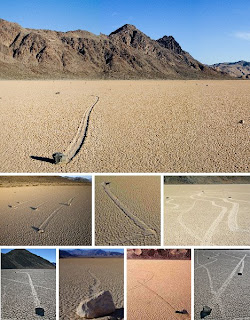
The classical natural wonders are huge and hard to miss - vast canyons, giant mountains and the like. Many of the most fantastic natural phenomena, however, are also least easy to spot. Some are incredibly rare while others are located in hard-to-reach parts of the planet. From moving rocks to mammatus clouds and red tides to fire rainbows, here are seven of the most spectacular phenomenal wonders of the natural world. 1) Sailing Stones The mysterious moving stones of the packed-mud desert of Death Valley have been a center of scientific controversy for decades. Rocks weighing up to hundreds of pounds have been known to move up to hundreds of yards at a time. Some scientists have proposed that a combination of strong winds and surface ice account for these movements. However, this theory does not explain evidence of different rocks starting side by side and moving at different rates and in disparate directions. Moreover, the physics calculations do not fully support this theory as wind...


Comments
Post a Comment